What is bar turning and why is it key to the manufacture of precision parts?
Precision turning is one of the most advanced processes in precision machining, particularly geared towards the manufacture of small automatic parts with highly complex geometries. It is used extensively in sectors such as automotive, medical, aerospace, locksmithing and industrial component manufacturing.
In Spain, more and more industrial companies are seeking precision turning companies capable of offering custom-made turned metal parts with very tight tolerances (±0.01 mm) and high production volumes with total repeatability.
What exactly does precision turning mean?
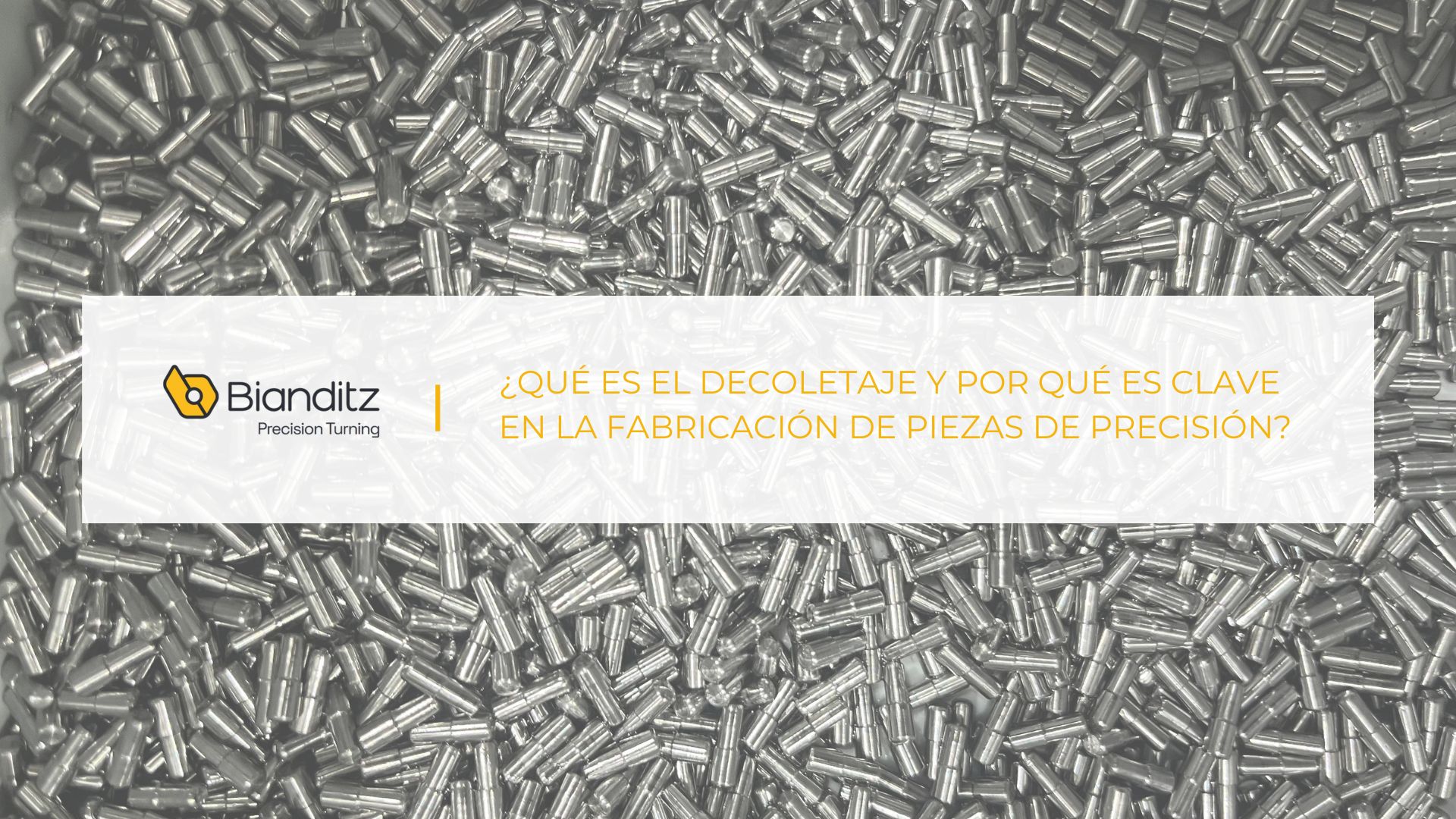
The term bar turning refers to automatic bar turning, a process in which the raw material (usually in the form of a metal bar) is continuously machined using automatic CNC lathes, producing turned parts with high dimensional accuracy.
Unlike other machining processes, bar turning is particularly optimised for:
- Medium and long series productions
- Small or micromechanical parts
- Components with complex geometries
- High standards of quality and repeatability
What is bar turning used for? Industrial applications
The precision bar turning service is used when the customer requires machined parts that guarantee:
- Consistent accuracy in large volumes
- Controlled surface finishes
- Automated and efficient production
- Manufacturing according to drawings or technical specifications
Some common examples of bar turning parts are:
- Components for locks and security systems
- Axles, pins and bushings
- Turned parts for medical systems
- Automotive components
- Industrial fasteners and assembly components
What are the most common machining processes?
There are several key processes involved in the manufacture of metal parts. The three most common are:
1. Turning
Process in which the workpiece rotates while a tool removes material.
It is the basis of precision bar turning and turning.
2. Milling
The tool rotates and the workpiece remains stationary.
It is used for prismatic geometries or flat surfaces.
3. Rectification
Finishing process to achieve extremely high tolerances and improve surface quality.
Bar turning mainly combines automatic CNC turning, although it can incorporate secondary operations such as milling, drilling or threading.
What is machining roughing?
Roughing is the initial phase of machining, where most of the material is removed to approximate the final shape of the part.
In small part machining processes, roughing must be perfectly controlled to avoid internal stresses or deformations, which is especially critical in precision parts.
Is milling the same as turning?
No. Although both are CNC machining processes, they have clear differences:
- Turning: the workpiece rotates → ideal for revolving parts
- Milling: the tool rotates → ideal for flat or complex surfaces
CNC bar turning is primarily based on automatic turning, optimised for assembly-line production.
Difference between precision turning and CNC machining
One of the most common questions is:
Are CNC turning and machining the same thing?
The short answer is: not exactly.
Although bar turning and CNC machining share similar technologies and principles, they are not exactly the same and respond to different production needs.
Bar turning is particularly specialised in the manufacture of small, high-precision parts, usually turned parts. This process is designed for assembly-line production, where large volumes with consistent repeatability are required. Automatic bar lathes are used for this purpose, allowing the part to be machined continuously from a metal bar, with a high level of automation and highly optimised cycle times.
CNC machining, on the other hand, is a broader concept that encompasses all types of parts, both small and large, simple and complex. It is used for short, medium and long runs, and employs a wide variety of machines, such as machining centres, CNC lathes, milling machines and multi-tasking machines. The level of automation can vary depending on the type of machine, the complexity of the part and the production volume.
Common materials in precision turning processes
Precision bar turning allows you to work with a wide variety of materials:
- Carbon steel
- Stainless steels
- Brass
- Aluminium
- Copper
- Special alloys
The choice of material depends on the end use of the part, the required tolerances and the industrial sector.
Types of machines used in bar turning
Lathes are at the heart of the process. The most commonly used are:
- CNC automatic lathes
- Sliding head lathes
- Multi-spindle lathes
- High-precision CNC lathes for metal
These machines allow multiple operations to be integrated into a single cycle, reducing time and costs.